


Eggstreme Farming

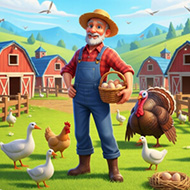
The clock in Eggstreme Farming never actually stops for you, and that single detail shapes almost everything else about how the farm feels. There is no button to fast-forward through a quiet afternoon or skip ahead to the next batch of eggs, so every minute spent waiting for a hen to lay or a pen to refill is a minute spent in real time. It sounds like a small design choice, but it is the first thing most new players notice once the excitement of setting up the first coop wears off in Eggstreme Farming.
| Genre | Farming and life simulation |
| Platform | PC, Browser |
| Core Loop | Feed and water animals, collect and sell eggs, expand pens, unlock licenses |
Building the Coop Empire in Eggstreme Farming
You begin with just a few birds and a small patch of land, and the game is built around growing that into something bigger. Four species are available: chickens, ducks, geese, and turkeys, each with slightly different needs around feeding, water, and space. Renting new pens is the main way forward, and every expansion adds more mouths to feed and more eggs to collect.
Shelves, furniture, and plants can be placed around the farm, which sounds cosmetic at first but actually helps keep trays, feed, and tools organized as the layout gets busier. Players who ignore this tend to backtrack across a cluttered farm just to find a water container.
The long-term goal is to grow from a handful of birds into the region’s leading egg producer. It is a slow build rather than a quick one, which explains why the early hours can feel repetitive before the bigger systems open up.
Feeding, Watering, and Treating Sick Birds
Keeping animals alive and productive means more than dropping food in a trough once. Food and water come in different quality tiers, and the tier chosen affects how well birds perform and how quickly they need attention again. Skimping on quality tends to catch up with you once egg output starts dropping. Health is tracked per animal, and sick birds need medicine or vaccines rather than recovering on their own. A typical morning in Eggstreme Farming tends to follow a fairly consistent order:
- Check food and water levels across every pen
- Collect eggs from chickens, ducks, geese, and turkeys
- Sell filled trays through the vending machines
- Check for sick animals and administer medicine or vaccines
- Complete any remaining daily tasks for experience
Letting food or water run dry across multiple pens at once is one of the fastest ways to lose ground on a farm you have spent hours building.
Turning Eggs Into a Real Business
Eggs collected in trays are sold through vending machines rather than a simple sell-everything button, which keeps the economic side of Eggstreme Farming feeling closer to running an actual small business. Money earned this way has to be split between reinvestment and covering recurring costs, since water, electricity, and internet bills all draw from the same pool.
That expense list is easy to underestimate early on. A farm that looks profitable on paper can quietly lose money if pens expand faster than the bills can be covered, which is why pacing expansion matters more than rushing toward every new species. Daily tasks tied to collecting eggs, selling trays, and caring for animals feed directly into experience, tying the economy to progression rather than treating them as separate systems.
XP, Licenses, and Why Progress Feels Slow in Eggstreme Farming
Experience earned from daily tasks feeds into a leveling system, and reaching new levels unlocks licenses that open up further expansion. You cannot simply buy your way into a bigger operation without first working through the level requirements tied to those licenses.
Combined with the day-and-night cycle and the lack of any time-skip option, this is where the grind becomes most visible. Waiting for XP to accumulate through repeated daily tasks, without any way to speed the clock along, is the single most discussed frustration among players working through the early license tiers. Once a few licenses unlock, the farm starts to feel less like a handful of pens and more like a small empire, with geese and turkey enclosures sitting alongside the original chicken coop.
What Players Find Frustrating in Eggstreme Farming
Community discussion tends to circle back to the same handful of complaints. The most common one is pacing: with no way to skip ahead, players describe long stretches where there is genuinely nothing to do but wait for animals to produce. That is a reasonable design choice for the genre, but it does not land well with everyone.
Technical issues also come up regularly, including glitches affecting chicken behavior and occasional performance hiccups during busier farm layouts. None of this is unusual for a smaller-scale simulation game, but it is worth knowing going in.
Can you speed up time in Eggstreme Farming?
No. There is no fast-forward option, so waiting for animals to produce eggs happens entirely in real time.
How many animal types can you raise in Eggstreme Farming?
Four: chickens, ducks, geese, and turkeys, each with slightly different feeding and water requirements.
Do animals actually get sick in Eggstreme Farming?
Yes. Health is tracked per animal, and sick birds require medicine or vaccines rather than recovering on their own.
None of that changes what Eggstreme Farming is trying to be: a patient farm builder where growth comes from daily upkeep rather than shortcuts. Whether that pays off depends on whether you enjoy watching a handful of chickens slowly turn into rows of geese and turkey pens, one tray of eggs at a time.